Church of Santo Tomás
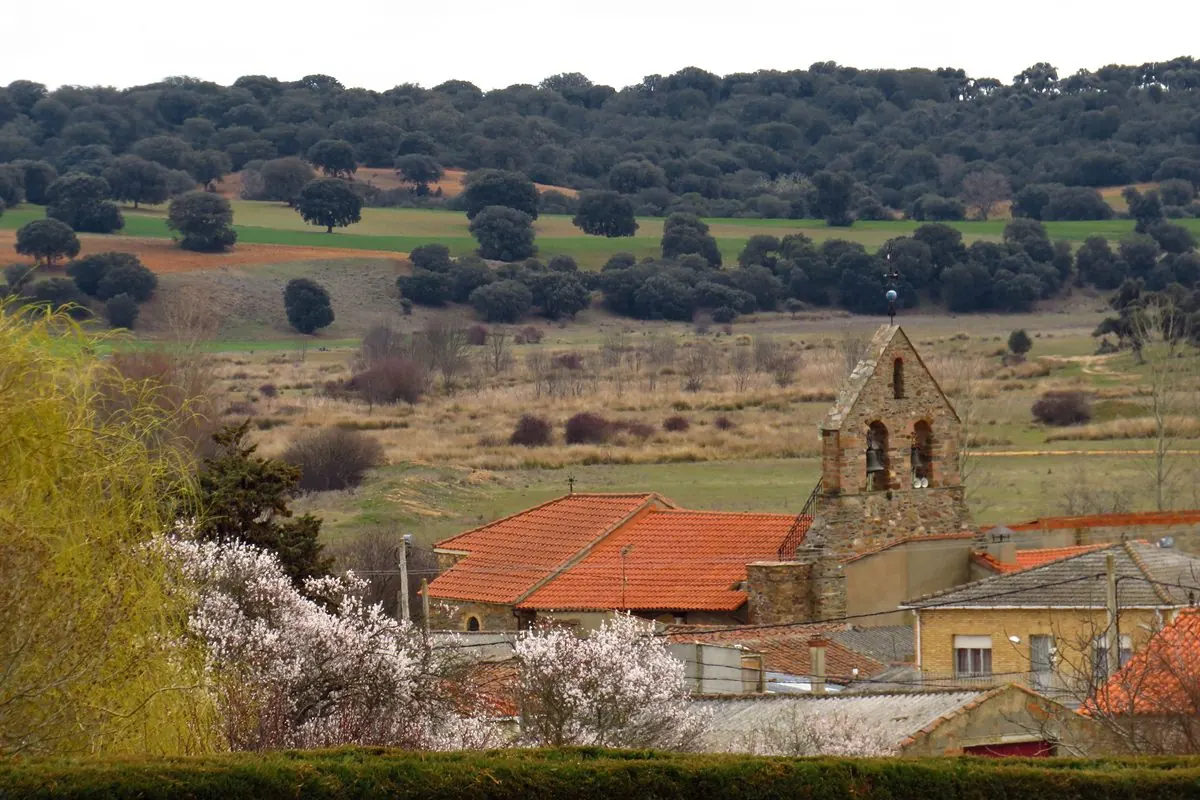
The church of Santa Eulalia de Tábara holds the oldest stones in the municipality: pieces carved thirteen centuries ago, in plain sight for anyone who knows where to look.
Exterior visible all year · interior only during services or by arrangement
Why it is worth the visit
The church has a restored Latin cross plan and a medieval doorway, but what makes it singular is in the details: two 7th-century stones decorated with figure-of-eight interlace (ribbons woven into the stone), an ashlar with a carved alquerque board (an old board game, a relative of noughts and crosses) and a gadrooned baptismal font, carved with lobes like the segments of a fruit.
Comparing this church with San Miguel in Moreruela, 2 km away, turns the visit into a reading of two periods: the pre-Romanesque stonework reused here and the fully medieval building there.
Documented chronology
- 7th century Pre-Romanesque pieces. Two stones with figure-of-eight interlace attributed to this century, reused in the church.
- Middle Ages Church and doorway. Building of the church with the doorway you see today; the ashlar with the alquerque board and the gadrooned font complete the set.
- Modern times Restoration. The present Latin cross plan is the result of a restoration documented by the sources.
Is Santo Tomás a Romanesque church?
The church is listed in the Románico Zamora catalogue, the provincial reference on this heritage, and its interest spans more periods: the two stones with interlace are attributed to the 7th century, well before the Romanesque, and the present plan comes from a restoration. It is a church to read in layers, not one of a single style.
When can the interior be seen?
Entry to the interior is free and only happens during services or by arranging the opening by phone: there is no visiting timetable and no guided tours. When you arrange the visit, ask which pieces can be seen inside and which from the street.
The 7th-century pieces are best enjoyed with the church open: arrange the visit.
Plan your visit