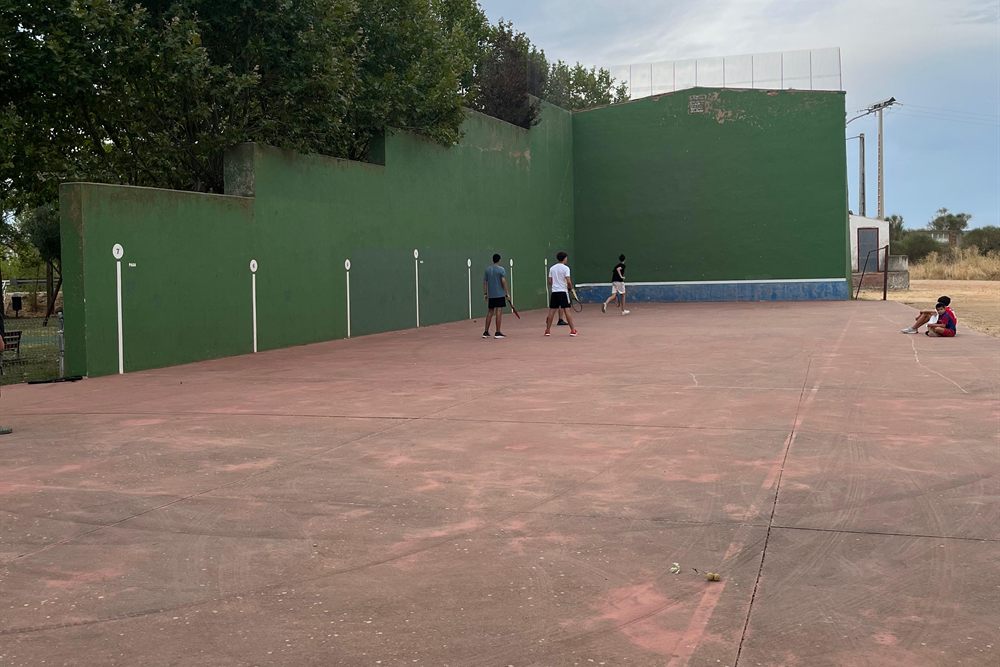
Pelota court
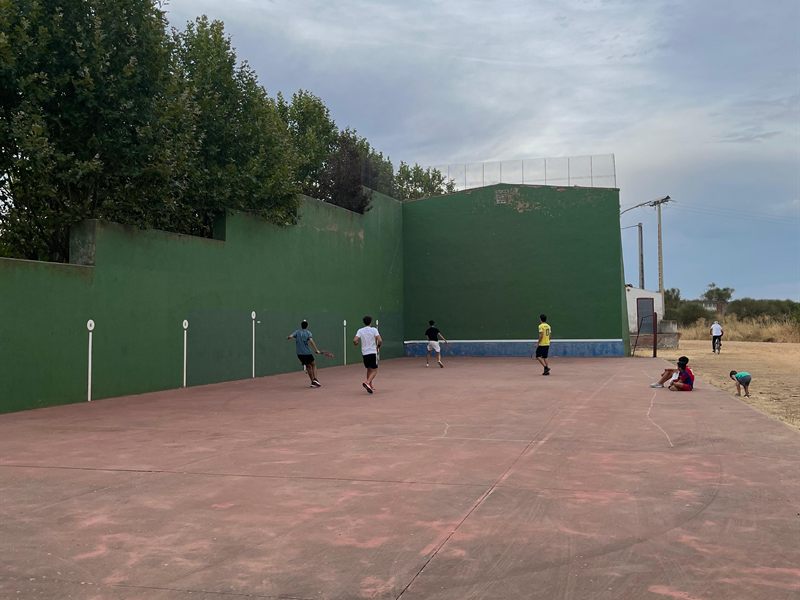
An open-air wall and a marked floor, with the water tower behind it.
The other half of the destination: here are the church of Santo Tomás, the Ethnographic Museum and the way in to the landscape of the Esla and to El Castillón. It belongs to the municipality of Moreruela de Tábara without being its main village.
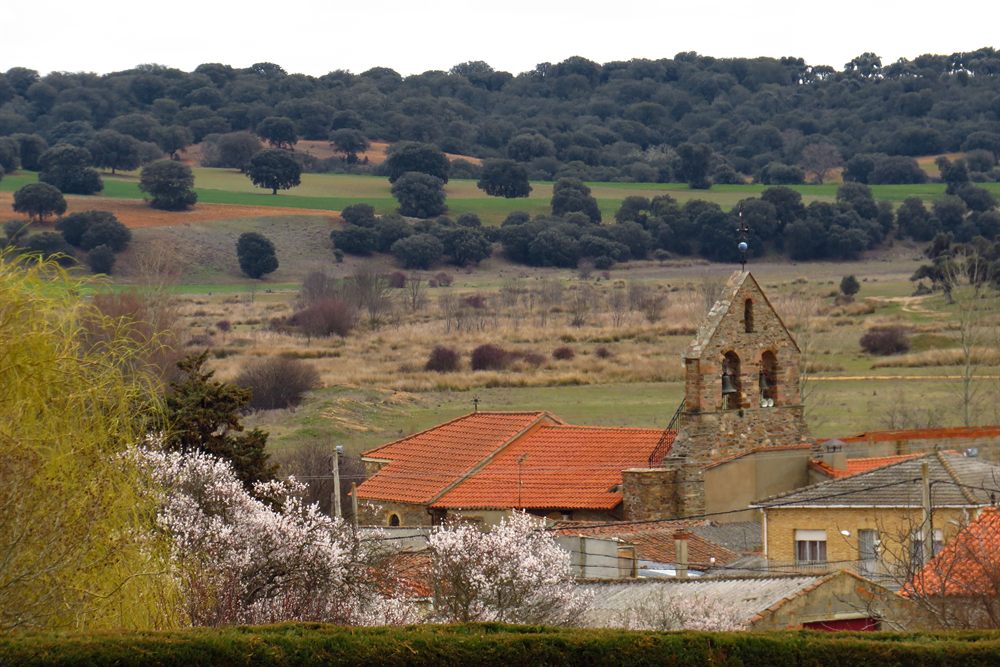
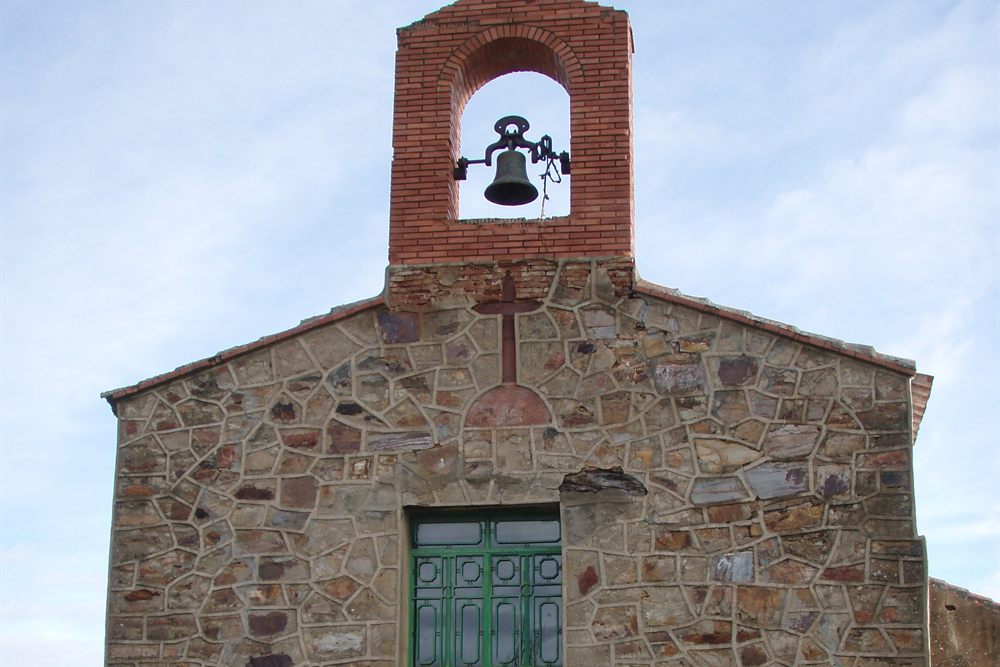
Exterior visible all year · interior only during services or by arrangement
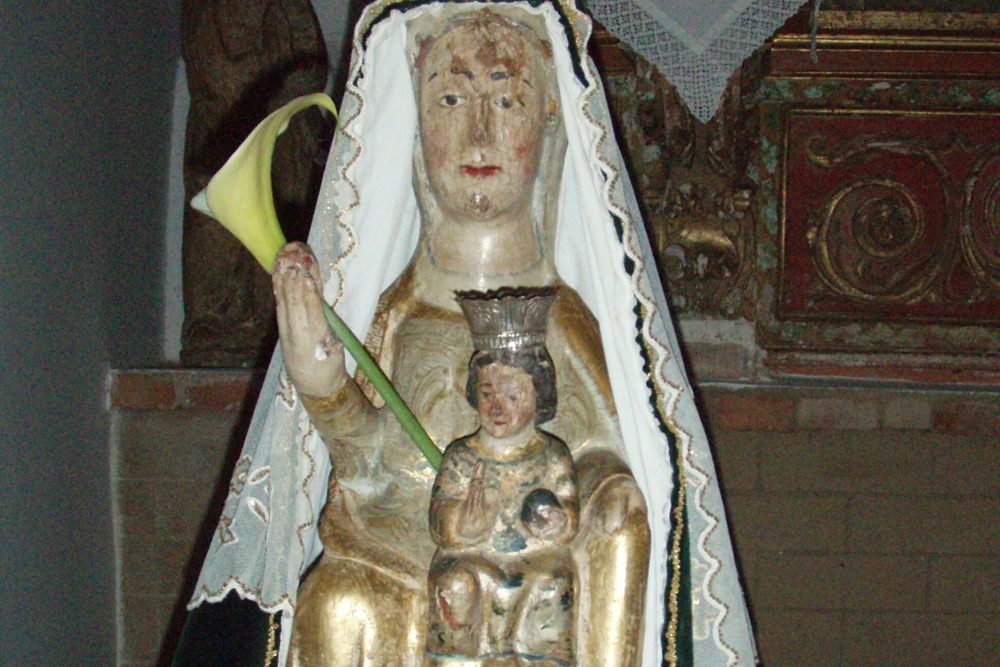
A church with a restored Latin cross plan and a medieval doorway. Its most singular pieces are two 7th-century stones carved with figure-of-eight interlace (ribbons woven into the stone), an ashlar with an alquerque board (an old board game) carved into it, and a gadrooned baptismal font, that is, carved with lobes like the segments of a fruit.
Opens on request, no fixed hours
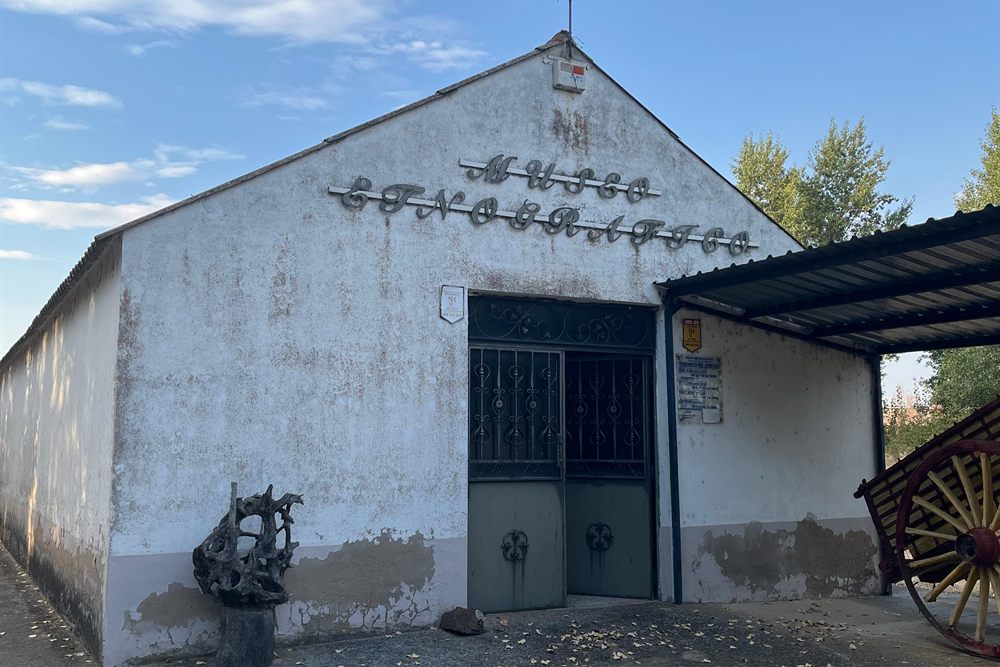
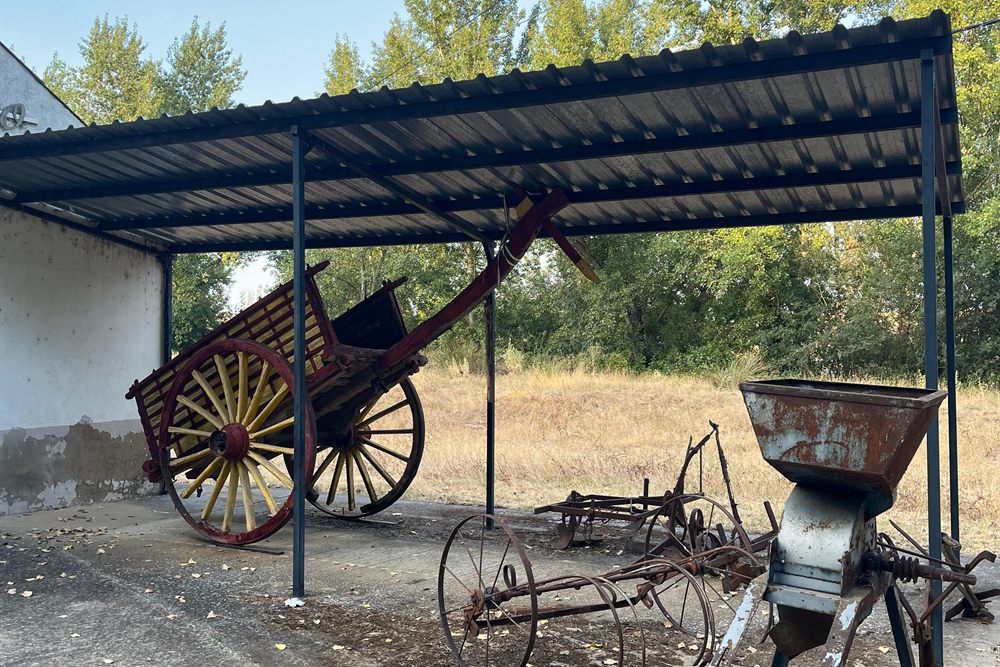
A municipal museum founded in May 2001 on the initiative of Antonio Ferrero Guerra and the ethnographic association of the area, and opened that October. Since 2024 it bears the name of its founder: Museo Etnográfico Antonio Ferrero Guerra. It brings together farming tools and domestic settings of the rural world, from yokes and implements to crockery, the bedroom and the trades. The opening is arranged in advance on the town council information line. There is no published protocol: when you call, ask how much notice is needed, who opens the museum and whether the building is accessible.
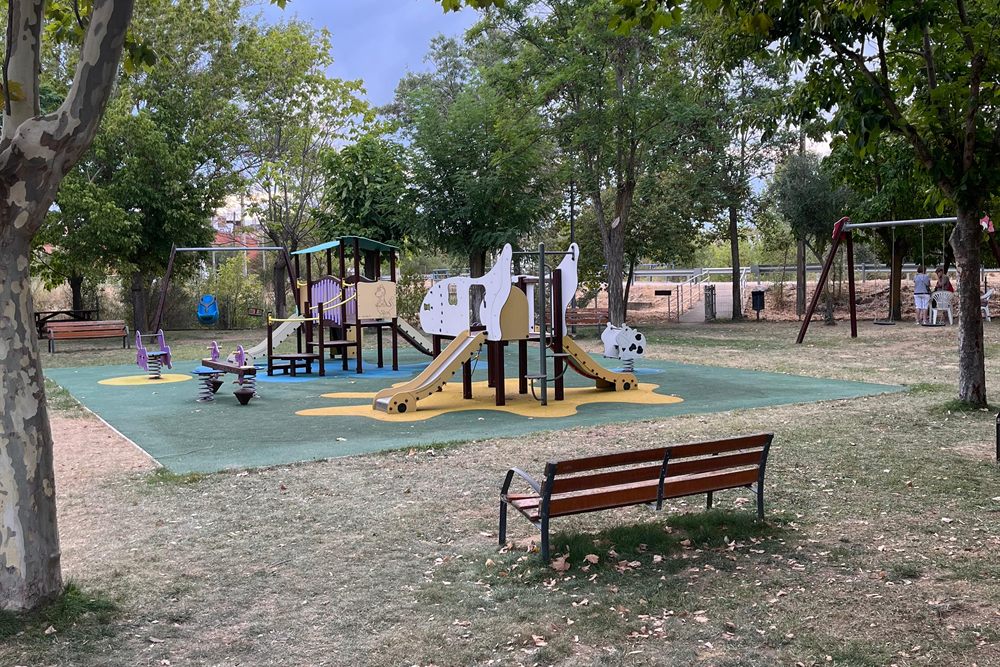
The pelota court, the children's playground and the pétanque pitch are all at the same spot in the village, one next to the other: you go from the game to the swings without taking the car. This is where Santa Eulalia gathers at the end of the day.
An open-air wall and a marked floor, with the water tower behind it.
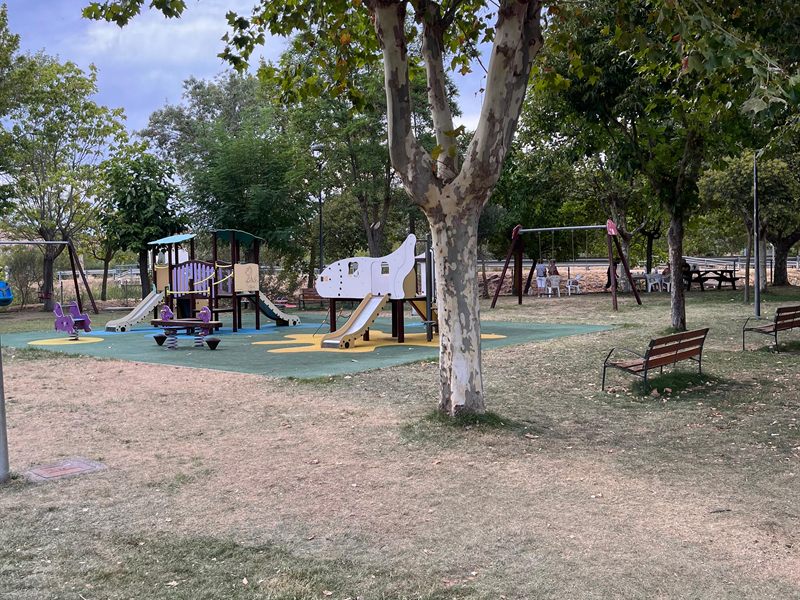
Play structures and swings on a cushioned surface, with benches and shade.
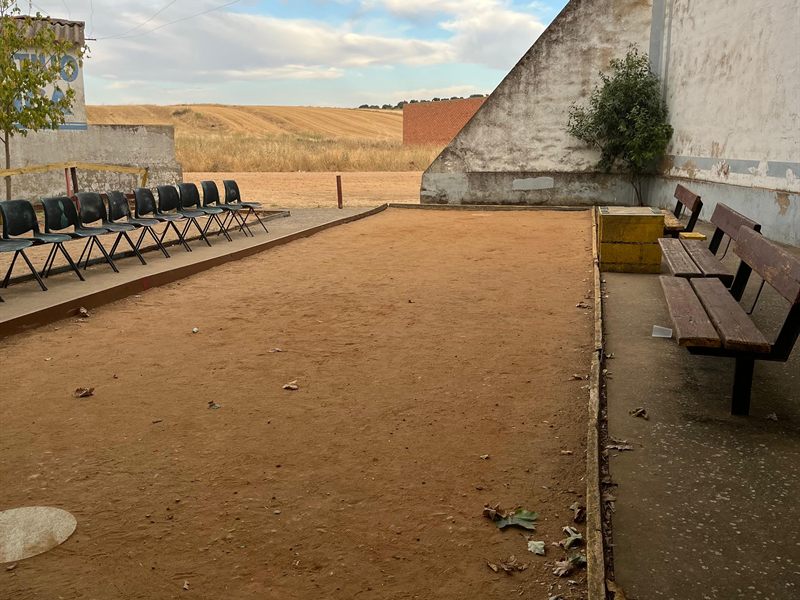
An earth pitch beside the playground, with seating and the pétanque club hut.
Existence confirmed on 03/08/2026 · check days, food and availability before you come.
The four establishments of the municipality listed in the tourism register are in Moreruela de Tábara, 2 km away: Bar Restaurante Edén, Bar Club de Jubilados, La Otra Casa (rural house) and Casa Pernila (holiday home).
In Santa Eulalia there is a municipal bar on calle Faramontanos, next to the Plaza Mayor.
In the Dehesa de Tardajos, beside the Esla, El Castillón records everything from schematic rock art to a fortified settlement of the 5th-6th centuries and a reoccupation in the 9th-10th centuries. Santa Eulalia is its interpretive gateway: the easiest way is to drive to Puente Quintos and follow the waymarked Camino Sanabrés path, 1.5 km beside the river, about 30 minutes on foot; from the village you can also cycle along the farm consolidation tracks in about 40 minutes, because the riverside path is for walkers only. Getting there does not entitle anyone to enter the excavations or the shelter with the paintings.
The land east of Santa Eulalia explains why there has been life here for so long: a crag over the Esla, a natural ford and a direct relationship between relief, water and defence that can be seen on the way to El Castillón. The Dehesa de Tardajos preserves that cultural landscape; when walking through it, do not leave the track. This site does not point to any viewpoint: there are no checked panoramic spots.
Yes. The villages are connected by a pleasant walk through open country, running alongside the road, of about 15 minutes.
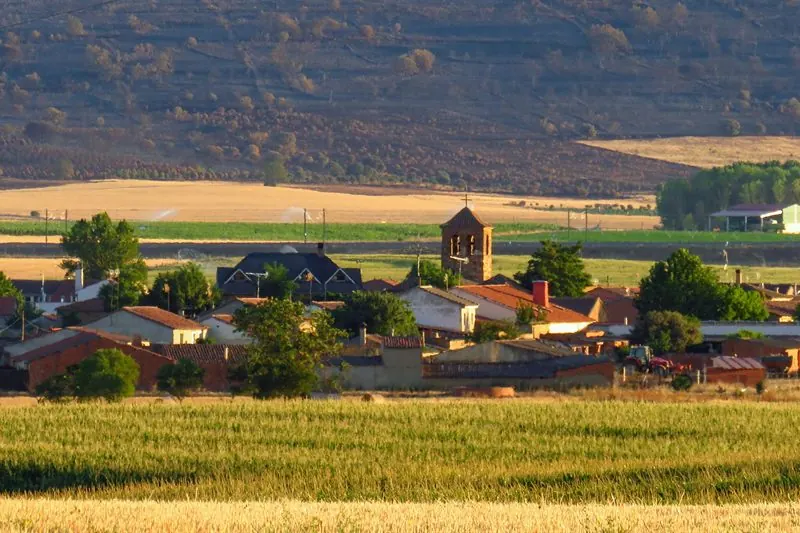
Museum, church interior or the track to El Castillón? Confirm openings before you come.
Plan your visit