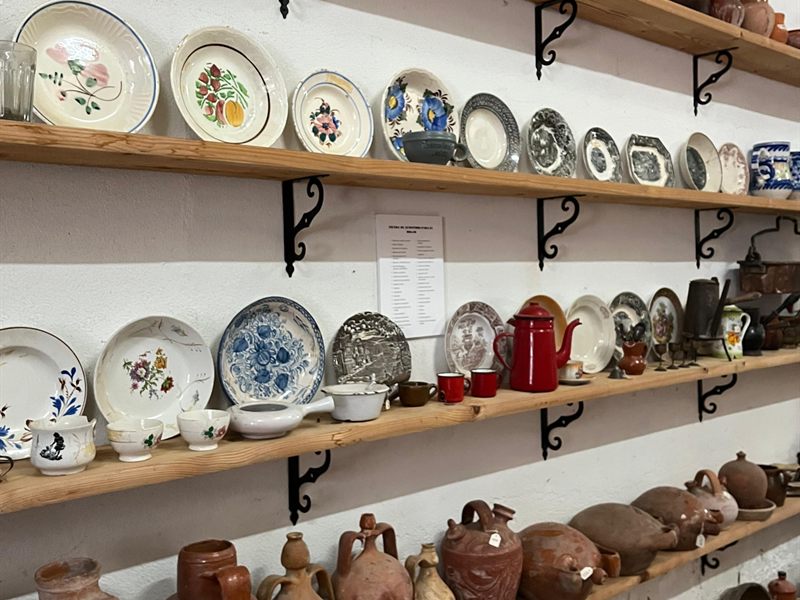
Crockery and clay
Tableware, jugs and kitchen vessels from the house, set out on shelves.
The municipal museum of Santa Eulalia de Tábara keeps the memory of work: the tools and the domestic settings people lived with in this area until only a few generations ago. Since 2024 it bears the name of its founder, Museo Etnográfico Antonio Ferrero Guerra.
Opens on request, no fixed hours · the opening is arranged in advance
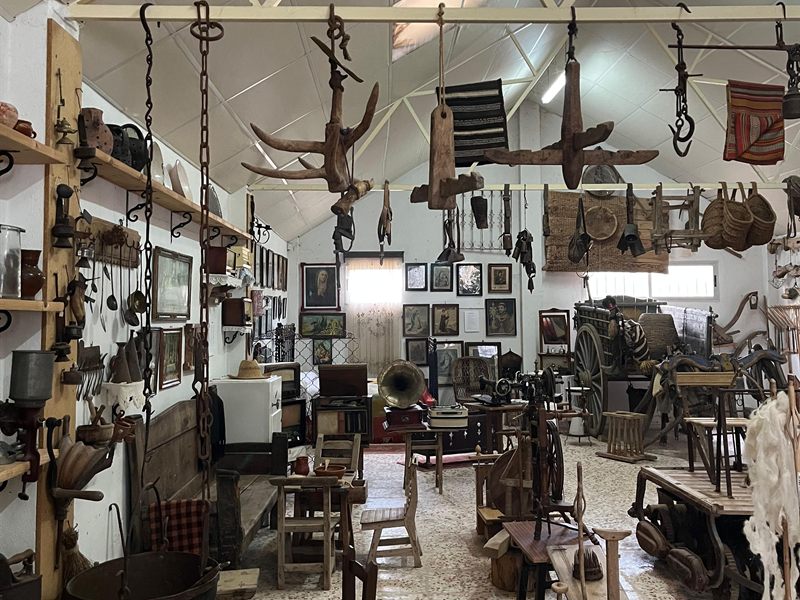
The museum was created and opened in 2001, and it brings together farming tools and domestic settings of the rural world: the house, work in the fields and the trades of the Tábara area. Yokes, collars and wooden implements hang from the ceiling of the main hall; around them are the crockery and pottery, the tools of each trade and the objects of the house, labelled by theme — kitchen, period clothing, bakery, pig slaughter, general store. Its interest is different from that of the churches: here you are not looking at stone but at the everyday life of recent generations, something that works especially well on visits with families and older people.
Tableware, jugs and kitchen vessels from the house, set out on shelves.
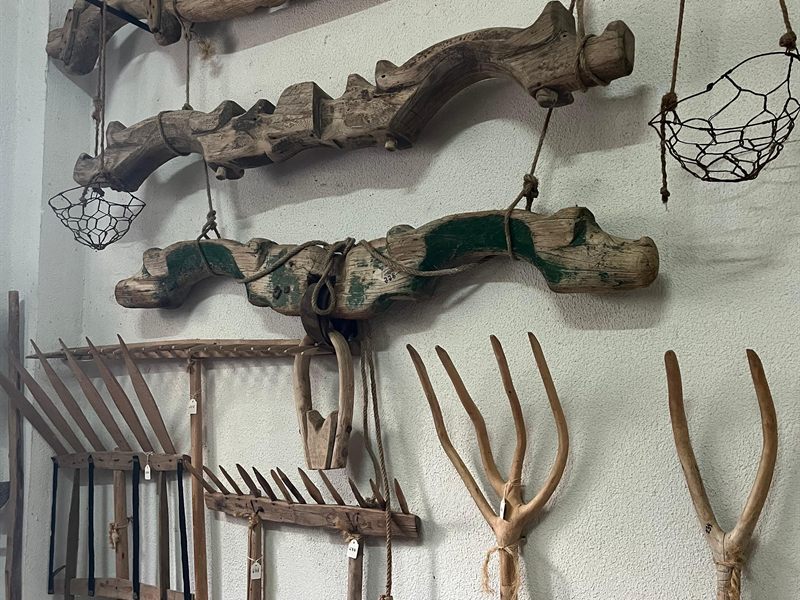
Yokes, pitchforks, winnowing forks and rakes, marked by use.
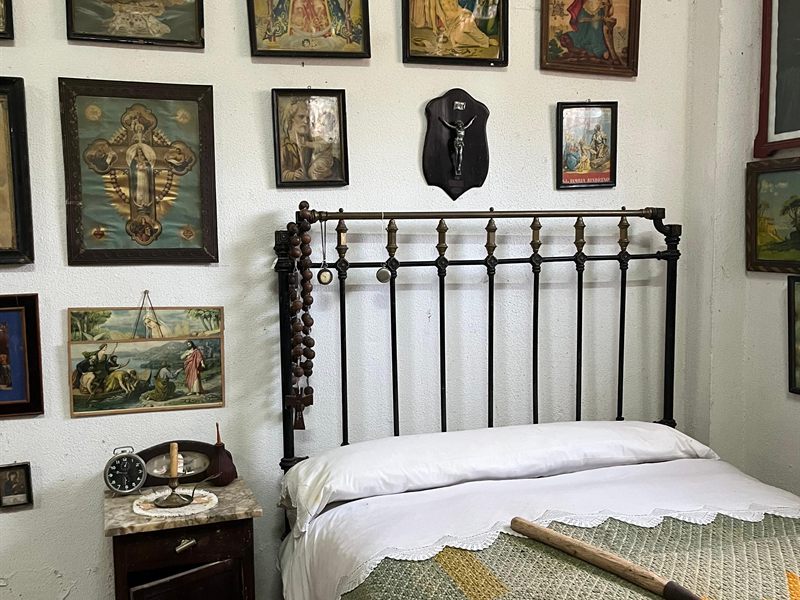
A bedroom with a wrought-iron bed, a bedside table and the prints on the wall.
There is no visiting timetable: the museum opens on request. The opening is arranged in advance on the town council information line, +34 686 70 21 03. There is no published protocol: when you call, ask how much notice is needed, who opens the museum and whether the building is accessible.
The museum opens on request: arrange the opening in advance before you come.
Plan your visit